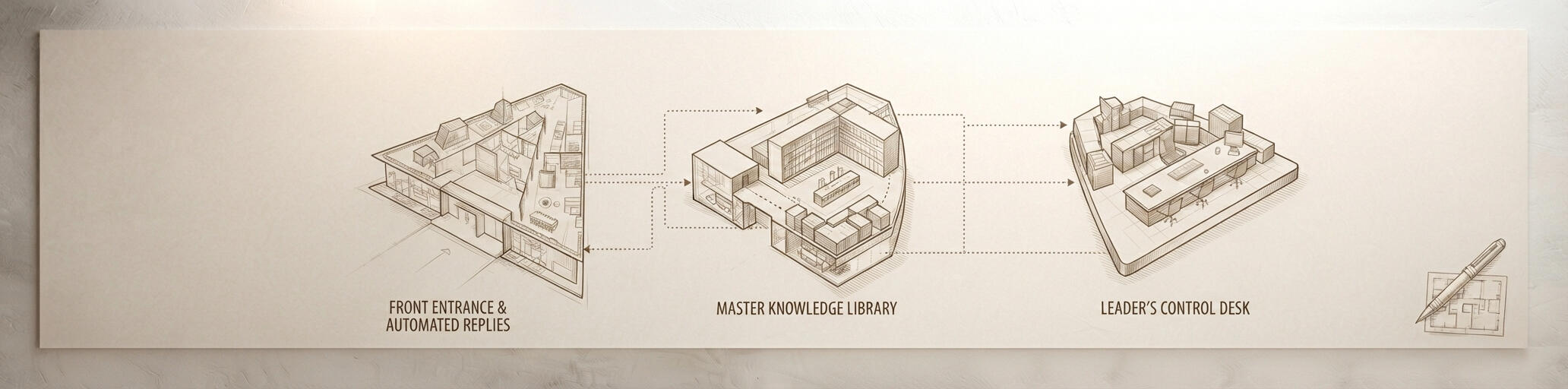
Launch Your In-House Company Brain
The Smartest Way to Implement AI in Your Business Without Writing a Single Line of Code.
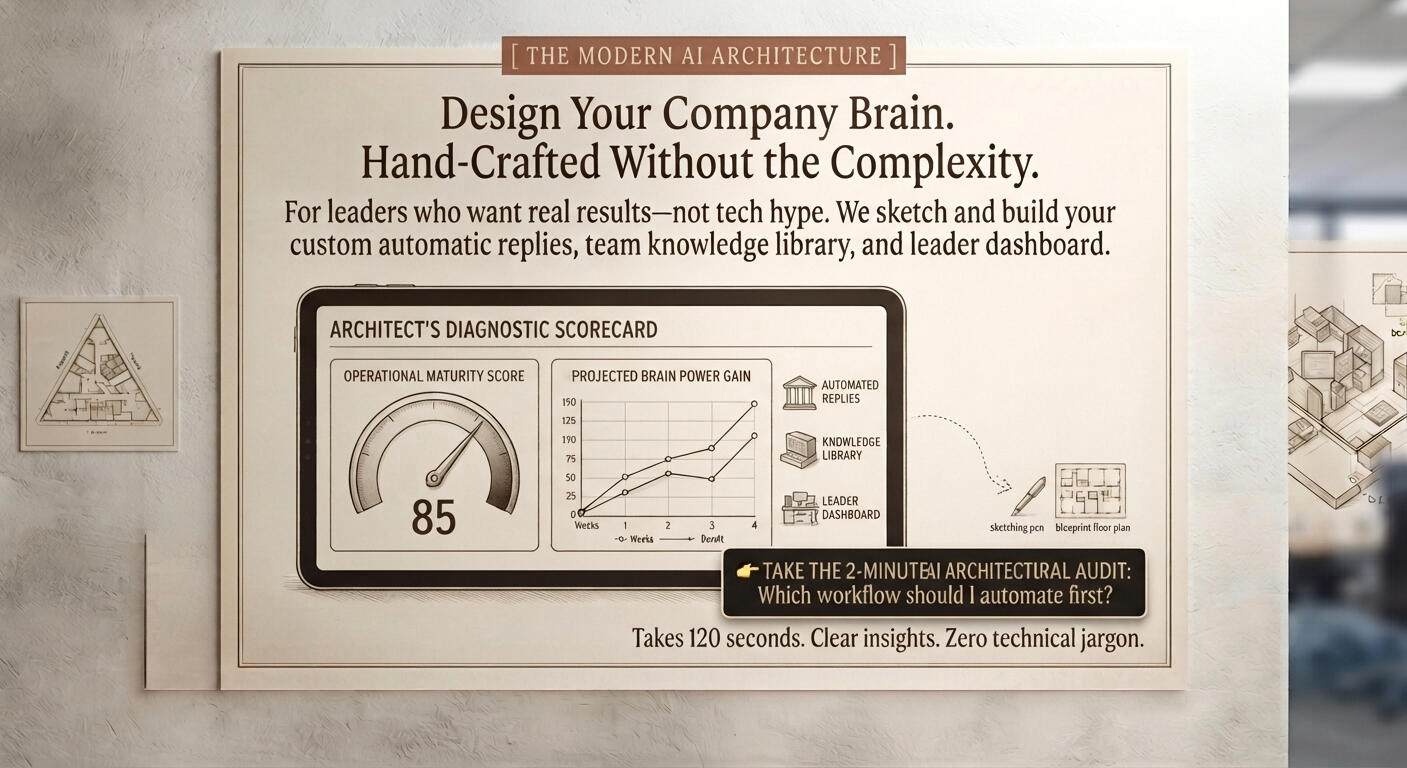
TAKE THE 2-MINUTE AI ARCHITECTURAL AUDIT: Which workflow should I automate first?
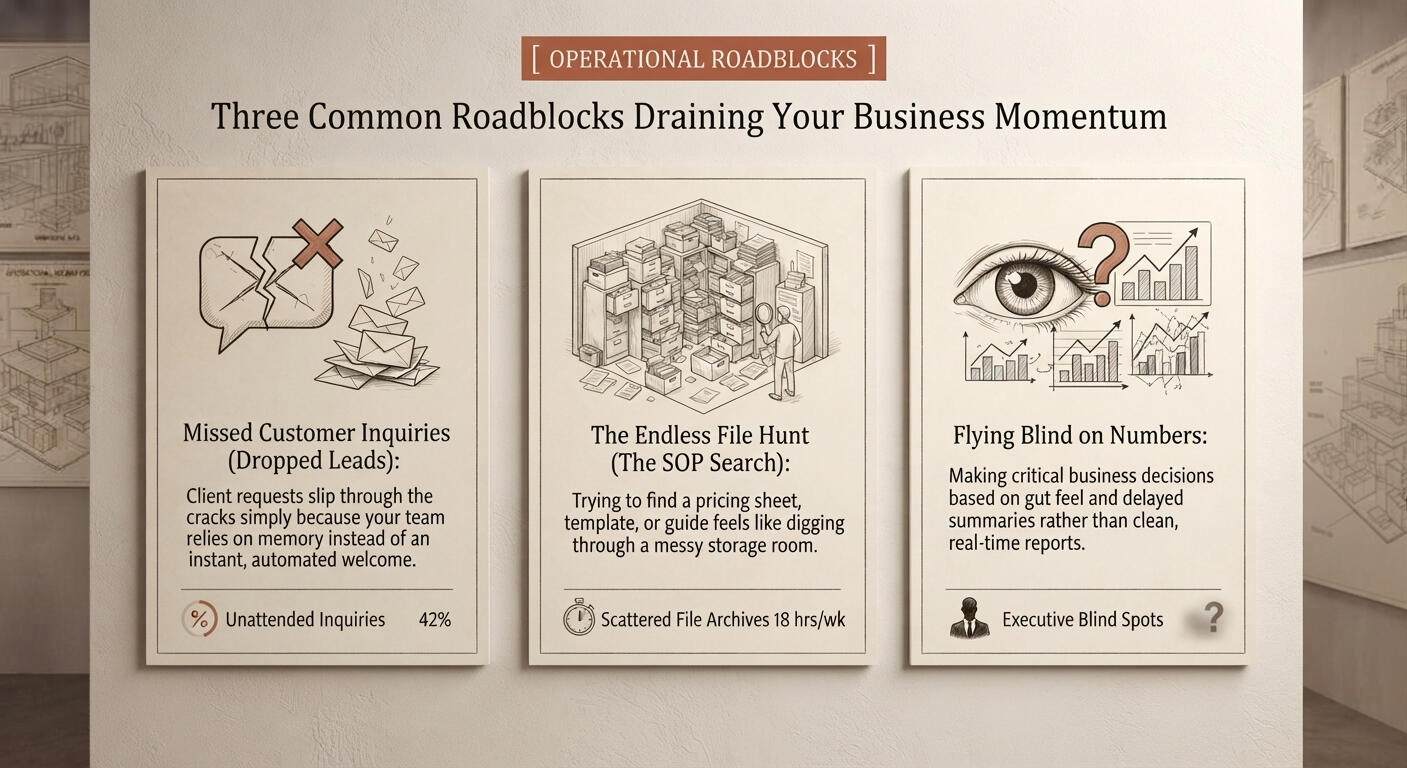
UNCOVER THE HIDDEN ROADBLOCKS: See why 90% of business systems stall (and how to fix yours)
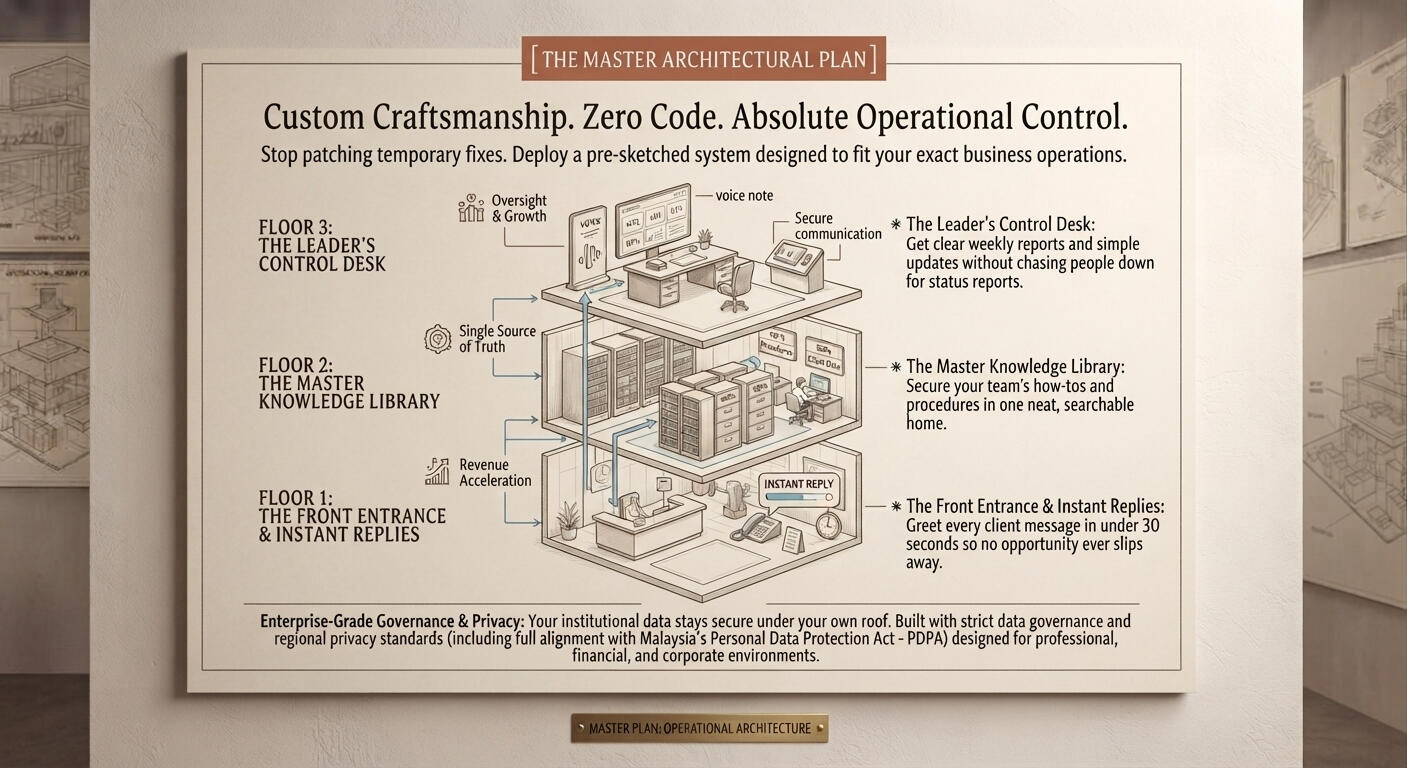
EXPLORE THE 3-TIER BLUEPRINT: See how the architecture works under the hood
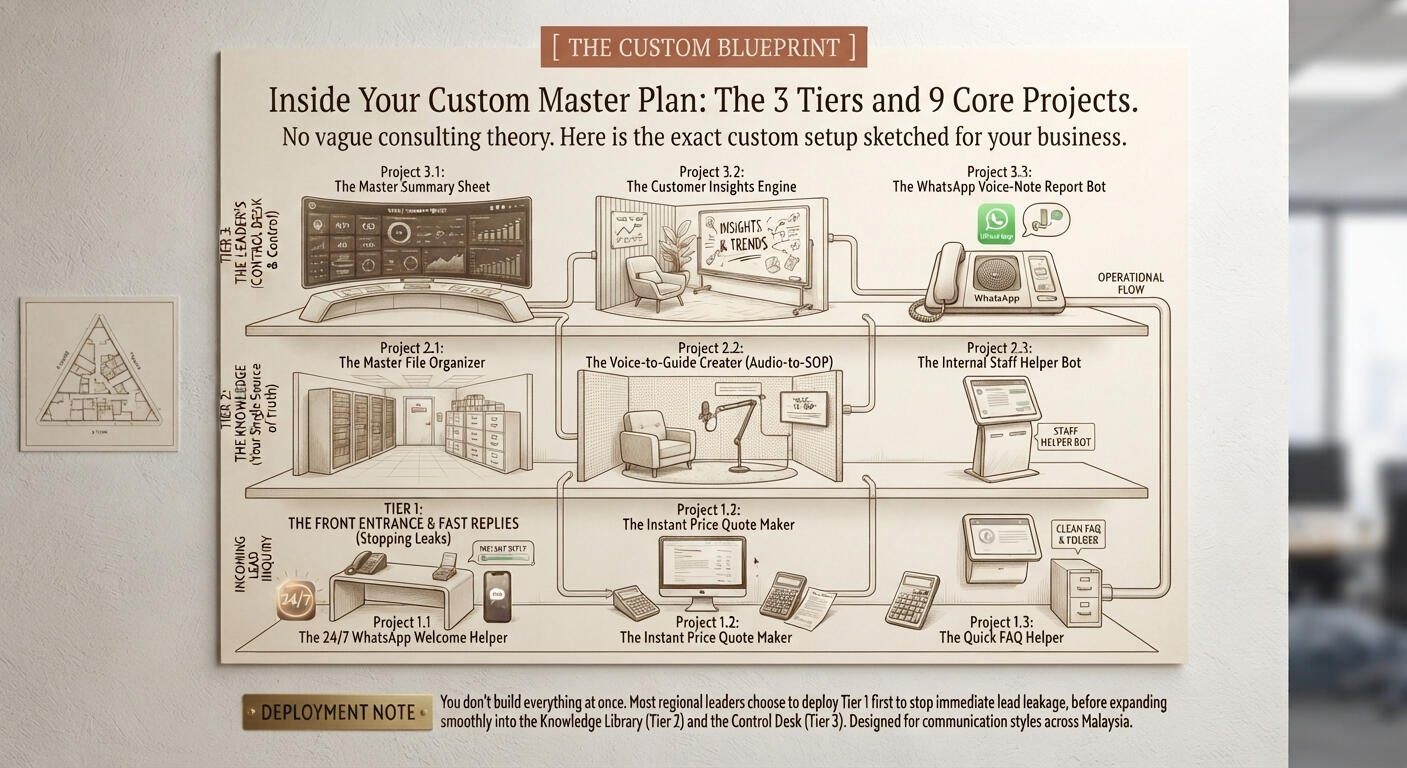
VIEW ALL 9 PROJECTS: Read the deep-dive breakdown of the complete custom blueprint
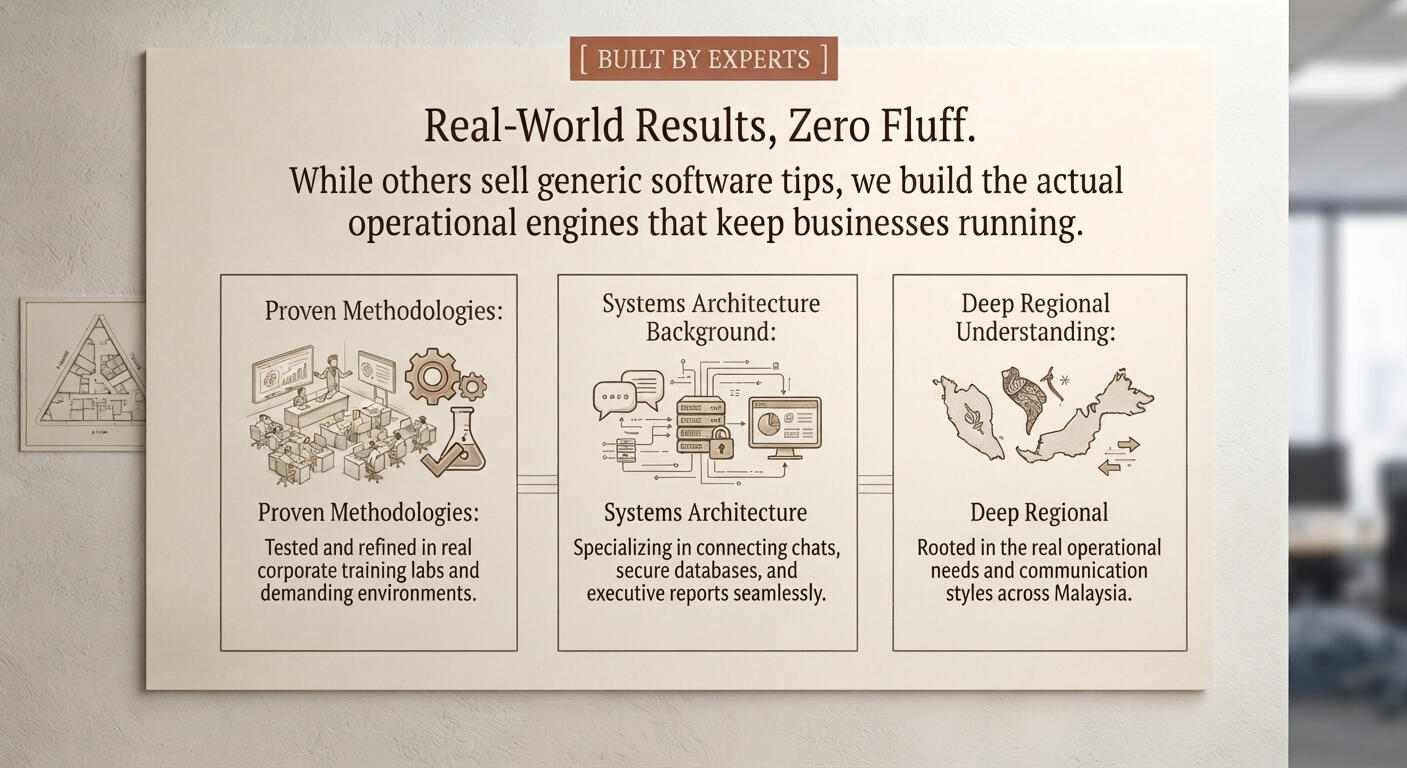
BEHIND THE ARCHITECTURE: Read the story, methodologies, and regional credentials
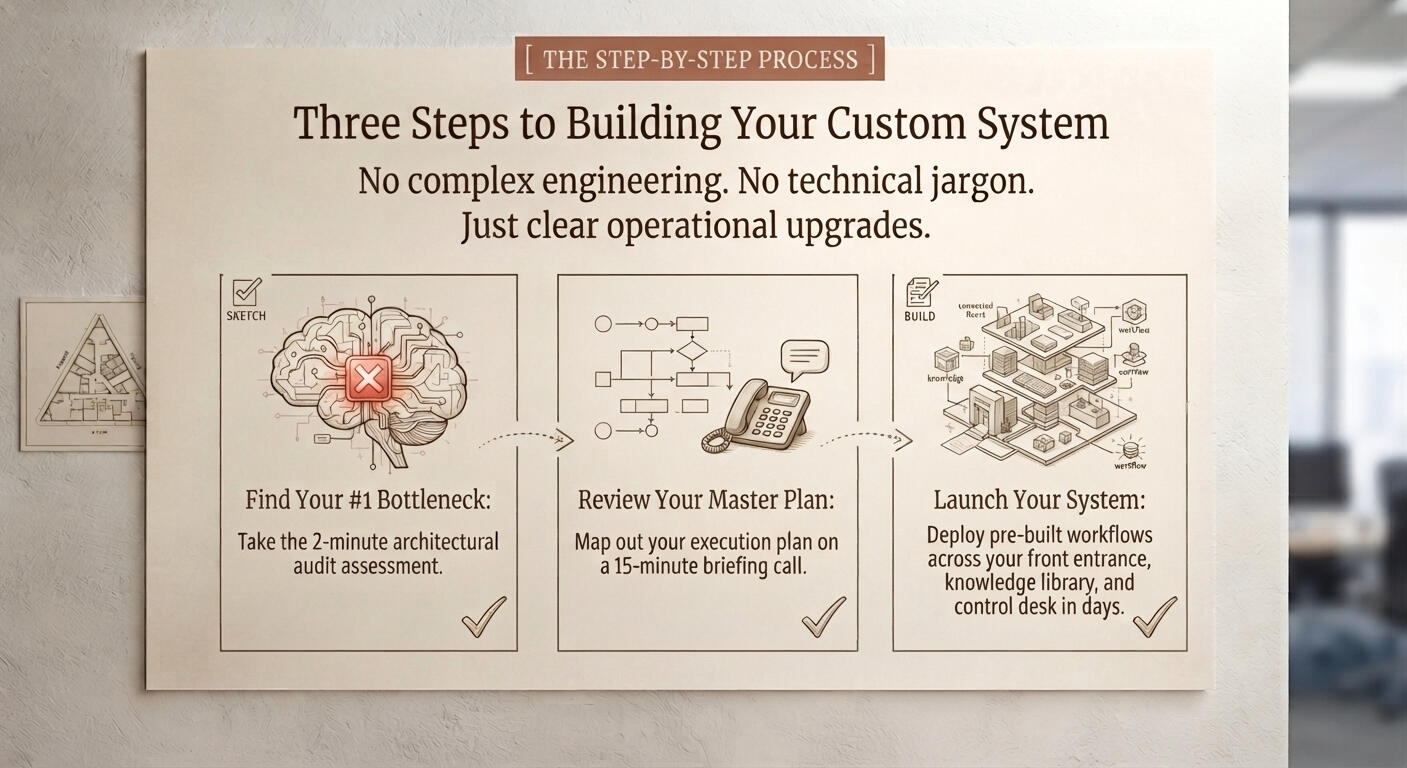
EXPLORE THE FULL ROADMAP: Read the step-by-step deployment guide
TAKE THE 2-MINUTE AI ARCHITECTURAL AUDIT: Which workflow should I automate first?

About
The Architect Behind the Systems
Carliff Rizal Carleel is a veteran tech founder, Columbia University machine learning certificate holder, and ICF-certified corporate coach. Having successfully built, scaled, and exited enterprise communication platforms, Carliff specializes in designing bespoke AI architectures and automated workflows for regional leaders. His approach combines rigorous systems engineering with practical operational clarity to give business owners absolute control.READ THE FULL BACKGROUND: Explore Carliff’s complete entrepreneurial journey, certifications, and past enterprise projects on his full profile page.
The 2-Minute AI Architectural Audit: Find Out Which Workflow to Automate First
When business owners realize they are trapped by manual data entry, slow response times, and scattered files, the immediate next question is almost always: "Where do we even start?"With so many operational bottlenecks competing for attention, it is easy to get overwhelmed. Should you fix customer follow-ups first? Clean up your internal document sharing? Or try to build an automated dashboard?Trying to fix everything at once usually leads to analysis paralysis or wasted software spending. That is precisely why we built the 2-Minute AI Architectural Audit.---### What Is the 2-Minute AI Architectural Audit?The AI Architectural Audit is a fast, interactive diagnostic tool designed specifically for business leaders and decision-makers.Instead of forcing you through a lengthy, complicated consulting questionnaire or requiring any technical background, the audit asks a few targeted questions about your current daily operations, team workflows, and customer handoff points. It strips away all the confusing software jargon and focuses strictly on your business reality.---### Why You Need It NowMost growing businesses make a costly mistake when they try to implement automation: they automate the wrong things first.* Automating Chaos: If you build an automated workflow on top of a broken, unorganized process, you only automate your mistakes faster.
* Guesswork vs. Precision: Guessing which process to fix first leads to wasted time, frustrated employees, and software subscriptions that your team never actually uses.
* The Momentum Drain: Every week you spend debating where to apply systems or AI is another week of lost profit margins and team burnout.You need an objective, outside lens to pinpoint exactly where your operational friction is costing you the most time and money.---### What You Get Out of ItWhen you complete the 2-minute audit, you receive clear, actionable insights without wading through technical complexity:* The #1 Target Workflow: You will instantly discover which specific workflow you should automate first to get the highest and fastest return on your time and investment.
* Clarity on Your Biggest Bottleneck: A clear breakdown of whether your primary leak is in lead response speed, manual data handling, or internal knowledge sharing.
* An Actionable Next Step: A straightforward recommendation on what to fix today so your business can run smoother tomorrow.---### Why Take It Now?Your competitors are not waiting around for manual processes to untangle themselves. Customer expectations for fast responses and smooth service are higher than ever, and internal team bandwidth is too valuable to waste on copying data between spreadsheets.The audit takes just 20 seconds to process, requires zero technical jargon, and gives you immediate clarity on your next operational move.Ready to stop guessing and start streamlining? Take the 2-minute AI architectural audit right now and discover which workflow you should automate first.What is one workflow in your business right now that you suspect is wasting the most hours every week?
Operational Roadblocks: The Three Things Slowing Down Your Business
Many growing businesses eventually hit a wall. Sales stop growing, teams get tired, and leaders feel like they are constantly pushing uphill.This usually does not happen because of bad products, lazy employees, or a weak market. Instead, it happens because of hidden roadblocks in daily operations. These invisible barriers trap teams in manual work, isolate critical knowledge, and slow down customer responses.Understanding these three roadblocks is the first step toward fixing them.---### Roadblock 1: Missed Customer Inquiries (The Speed-to-Lead Lag)In today's market, customers expect fast answers. When someone reaches out with a question or fills out a form on your website, they want a reply right away. Yet, many companies operate on a slow, reactive schedule—taking hours or even days to respond.#### The Reality and the Cost* The Slow Response Trap: Industry data from Drift and MIT reveals that the average business takes 47 hours to respond to an inbound lead. Meanwhile, research from Harvard Business Review shows that 78% of customers buy from the first company that responds.
* The Penalty of Waiting: If you wait even 30 minutes to reply to a new lead, your chances of qualifying that lead drop by 21 times.
* Wasted Marketing Dollars: When inquiries sit unread over the weekend or pile up in an inbox, potential clients simply move on to a faster competitor. You spend money on marketing and advertising, only to lose the customer because your team cannot reply fast enough.---### Roadblock 2: The Endless File Hunt (Tribal Knowledge & Data Silos)When important information lives only inside people's heads or gets scattered across random computer folders and separate software apps, a business becomes structurally fragile.#### The Reality and the Cost* The Time Sink: Research from IDC and McKinsey shows that knowledge workers spend about 2.5 hours every day—roughly 30% of their workday—searching for information and files.
* Manual Data Drag: Studies on administrative workflows show that employees spend over 9 hours every week manually copying and pasting data from emails, PDFs, and spreadsheets into different systems. This manual entry costs companies an average of $28,500 per employee each year in wasted productivity.
* Key-Person Risk: When processes are not written down, your business depends entirely on specific individuals. If a key staff member takes leave or leaves the company, daily operations stall because no one else knows where the files are kept or how the tasks are completed.---### Roadblock 3: Flying Blind on Numbers (Lack of Clear Visibility)Many growing companies cannot see a clear, up-to-date picture of how their business is performing. When operational and financial data is locked inside separate apps or messy spreadsheets, leaders cannot see what is happening in real-time.#### The Reality and the Cost* Decision-Making by Guesswork: Without an integrated dashboard, leaders are forced to make crucial business decisions based on guesswork or delayed end-of-month reports.
* Delayed Problem Solving: By the time a leader discovers a cash flow dip or a rising customer churn rate in an old monthly report, weeks have passed, and the problem has already grown worse.
* Missed Growth Opportunities: Operating without clear metrics means you cannot easily spot which products, services, or marketing channels are actually driving profit margins, leading to wasted effort and misallocated budgets.---### A Real-World Example: Clearing the RoadblocksImagine a growing service business. They are spending money on ads, and inquiries are coming in. However:1. Because the team is busy, inbound messages sit in an inbox for hours, leading to a massive speed-to-lead lag where prospective clients buy from a faster competitor.
2. Once a client signs up, staff members spend hours manually copying client details across three different spreadsheets, creating data entry errors and administrative drag.
3. When the primary operations manager takes a week off, nobody else can find the project templates because everything was stored as tribal knowledge in personal folders.By replacing these manual habits with automated workflows, instant lead routing, and centralized document systems, the business eliminates administrative friction. Sales response times drop to seconds, data copying disappears, and the team regains hours of productive time every week.---Ready to stop putting temporary band-aids on your daily operations and build a system that actually lasts? No complex code, no confusing tech talk—just a straightforward way to get your business running smoother.
The Master Architectural Plan: How to Build a Self-Sustaining Business Engine
When a growing business fixes its immediate operational roadblocks, a new challenge appears: how to stop putting out fires permanently and build a system that runs smoothly on its own.Fixing one broken spreadsheet or speeding up a single email reply helps in the short term, but long-term growth requires a complete operational structure. That is where the Master Architectural Plan comes in.---### What Is the Three-Tier Blueprint?To eliminate daily chaos and scale smoothly, your business needs a structured framework that connects your speed, your internal knowledge, and your executive decision-making. Think of this as building a house—you cannot put up the walls or paint the rooms without a solid foundation.Based on our architectural design framework, the system is structured into a clear, three-tier blueprint designed specifically to take your business from reactive firefighting to automated, predictable growth:* Floor 1: Speed and Lead Capture (The Foundation)
* This is the ground level of your business engine. It focuses entirely on speed and capturing demand.
* Instead of letting leads sit unread in an inbox, Floor 1 utilizes automated reception and instant responses to ensure no client inquiry is ever lost, completely eliminating the speed-to-lead lag.* Floor 2: Centralized Knowledge & Digital Library (The Core Infrastructure)
* This is the middle level where your day-to-day operations and team resources live.
* Instead of scattering files across random folders or trapping processes in individual heads, Floor 2 organizes company know-how and digital files into a centralized, searchable knowledge library to permanently eliminate information silos.* Floor 3: Executive Control Desk (The Command Center)
* This is the top level of your enterprise architecture, functioning as an executive control desk.
* Instead of flying blind on numbers or relying on outdated month-end reports, Floor 3 provides leaders with real-time operational insights, automated metrics, and growth intelligence for strategic decision-making.---### Why You Need an Architectural Approach (The Data & Evidence)Most companies try to solve growth problems by buying random software tools or hiring more staff to handle administrative tasks. Industry research and operational case studies show why this ad-hoc approach fails:* The Cost of Disconnection: According to enterprise workflow studies, businesses lose up to 20% to 30% of their annual revenue every year due to inefficiencies caused by disconnected systems and manual data handling.
* Adding Complexity: Stacking new software apps on top of unorganized processes only creates more data silos and administrative drag, rather than solving the root cause.
* Key-Person Traps: Without a multi-tier blueprint, your business remains dependent on specific individuals to keep daily tasks moving, creating massive operational vulnerability when staff members transition or take leave.An architectural approach ensures that your response speed, your company knowledge, and your executive visibility support each other in a clean, logical sequence.---### What Happens Under the Hood? (Case Study Insights)When you look under the hood of a fully optimized three-tier architecture—such as systems built for corporate training programs, regional enterprise proposals, and fast-growing operations—you see a connected ecosystem:1. Instant Capture (Floor 1): Inbound leads trigger automated webhooks and instant messaging integrations (like WhatsApp and automated scheduling tools) that qualify prospects and book briefings in seconds instead of days.
2. Searchable Knowledge (Floor 2): Standard operating procedures and custom knowledge bases (powered by transcription tools and vector databases) are centralized, allowing new team members to onboard rapidly without depending on individual staff members.
3. Executive Intelligence (Floor 3): Automated workflows gather performance metrics into a real-time dashboard, giving leaders clear visibility to make fast, data-driven decisions.---### Explore the Three-Tier BlueprintMoving from a reactive, chaotic operation to a streamlined business engine does not happen by accident—it requires a clear blueprint.Explore Your Custom Master Plan
Moving from a reactive, chaotic operation to a streamlined business engine requires more than high-level concepts. You do not need vague consultancy theory; you need an exact, actionable roadmap.Ready to see exactly how this applies to your operations?Explore the Custom Master Plan next, where we expand this three-tier architecture into nine core projects. No vague consultancy theory—here is the exact custom setup sketched for your business.Click here to dive into the Custom Blueprint and explore the nine core projects that will transform your operations.
The Custom Blueprint: Inside the Three Tiers and Nine Core Projects
When business leaders realize their operations are bogged down by administrative drag, slow response times, and scattered information, generic advice no longer helps. Broad theories about digital transformation or standard software tutorials fail to address the specific friction points inside a growing enterprise.You do not need vague consultancy theory. You need an exact, tailored setup sketched specifically for your business model.---### Moving Beyond Generic Theory: The Three Tiers and Nine Core ProjectsA true enterprise architecture translates high-level strategy into concrete execution steps. Across our proven framework, the three overarching tiers expand directly into nine core operational projects[cite: 2]. Each project targets a specific operational bottleneck, ensuring that your transition from manual firefighting to automated growth is systematic and measurable.---### Tier 1: The Front Entrance (Speed & Lead Capture)Projects 1 through 3 focus entirely on capturing market demand instantly, driving revenue growth, and eliminating the speed-to-lead lag[cite: 2].* Project 1: 24/7 WhatsApp Welcome Helpers
* What it is: Instant messaging automation that greets inbound prospects the moment they reach out[cite: 2].
* The Business Impact: Eliminates the hours or days leads spend sitting in unread inboxes, capturing prospects before they turn to a faster competitor.* Project 2: Automated Proposal Tools
* What it is: Streamlined generation workflows that dynamically configure and deliver executive proposals[cite: 2].
* The Business Impact: Accelerates the sales cycle from first contact to boardroom briefing by removing manual document preparation bottlenecks.* Project 3: Efficient FAQ Concierges
* What it is: Intelligent response agents trained to handle routine client inquiries instantly[cite: 2].
* The Business Impact: Saves sales teams from repetitive communication tasks, ensuring human attention goes only to high-value prospects.---### Tier 2: The Knowledge Library (Core Infrastructure)Projects 4 through 6 organize company know-how and digital files to establish a single source of truth and eliminate information silos[cite: 2].* Project 4: Standardized File Organization
* What it is: A structured, searchable digital directory where company documents, assets, and operational guides are indexed[cite: 2].
* The Business Impact: Prevents documents from getting lost in personal folders or email attachments, ensuring easy retrieval across teams.* Project 5: Voice-to-Guide Documentation
* What it is: Speech-to-text workflows that turn daily briefings, site updates, and audio notes into formal step-by-step documentation[cite: 2].
* The Business Impact: Captures critical operational notes effortlessly without forcing teams to spend hours typing manual reports.* Project 6: Internal Staff Advisory Bots
* What it is: Custom knowledge assistants that allow team members to query internal standard operating procedures instantly[cite: 2].
* The Business Impact: Protects the company against brain drain and key-person risk, enabling rapid onboarding and smooth operations even during staff absences.---### Tier 3: The Leader’s Control Desk (Executive Command Center)Projects 7 through 9 provide leadership with real-time operational visibility and automated strategic intelligence[cite: 2].* Project 7: Automated Telemetry Sheets
* What it is: Centralized reporting views that pull live operational metrics and performance data into a single screen[cite: 2].
* The Business Impact: Replaces delayed month-end reports with live visibility, enabling leaders to spot operational bottlenecks immediately.* Project 8: Customer Insight Engines
* What it is: Data processing workflows that organize and segment client databases to uncover behavioral trends[cite: 2].
* The Business Impact: Secures records safely while preparing clean segments for targeted enterprise outreach and strategic planning.* Project 9: Voice-Note Reporting
* What it is: Automated executive digests that process audio updates and summarize project statuses for leadership[cite: 2].
* The Business Impact: Gives decision-makers a complete pulse of the enterprise in minutes, allowing for fast, data-driven management.---### Why a Custom Blueprint Matters (The Data and Evidence)Generic software implementations fail because they treat every business the same way. Industry analyses on enterprise transformations show that custom-architected workflows deliver drastically better returns:* Productivity Gains: Organizations that replace manual data transfer with integrated workflows reclaim up to 30% of total staff capacity previously lost to administrative friction.
* Error Reduction: Automated pipelines eliminate human keystroke errors, safeguarding customer records and operational accuracy.
* Scalability: Structured nine-core frameworks allow businesses to scale transaction volume without a linear increase in administrative headcount.---Meet the Architects Behind the System
Transitioning your business from a collection of disconnected apps into a unified, self-sustaining engine requires more than just a blueprint—it requires proven execution backed by real-world field experience. You need to know who is designing your systems, what methods they use, and how they apply them on the ground.Ready to see who is building this for you? Discover the story, methodologies, and regional credentials behind the architecture in our next article.Click here to learn about the experts building your enterprise architecture and how our proven frameworks protect your business momentum.
The Architect Behind Your Transformation: Why Carliff Rizal Is Uniquely Qualified to Build Your Company Brain
When businesses embark on an operational transformation—building a permanent corporate infrastructure like The In-House Company Brain (IHCB)—the single most important decision they make is not choosing the tools, but choosing the architect.Generic prompt engineers and outside tech agencies often leave companies trapped in the Agency Ransom Loop or the Solo Prompt Trap. What your organization needs is complete independence, absolute data security, and an internal system built to last.That is why Carliff Rizal (Carliff Rizal Dato' Carleel) is the exact right person to architect and implement this system for you. He is a rare hybrid of ICF-certified executive coach, exited SaaS founder, full-stack developer, and AI systems architect.Here is why your enterprise is in absolute expert hands.---## 1. Proven Tech Founder & Exited SaaS CEOCarliff is not a theorist who learned AI from a blog post; he is a battle-tested software founder.* Built and Exited YesHello: During the pandemic, Carliff founded YesHello, an AI-powered SaaS communication platform designed to help SMEs manage WhatsApp communication at scale.* Real-World Scale: Under his leadership as Founder and CEO, YesHello automated over 850+ SMEs, secured major investment, won industry recognition, and was successfully acquired by a tech group in 2024.* Direct Relevance to Floor 1 & 3: He has spent years engineering the exact high-velocity WhatsApp webhooks, messaging architectures, and automation pipelines that form Floor 1 and Floor 3 of your company brain.## 2. Elite Technical Mastery (Columbia University Certified)True systems architecture requires bridging deep technical execution with human workflow design.* Columbia University Machine Learning: Carliff holds a Professional Certificate in Machine Learning for Data Science and Analytics from Columbia University in the City of New York.* Full-Stack Developer: He graduated with excellence from the intensive coding bootcamp at MaGIC (supported by NEXT Academy), giving him hands-on command over APIs, database schemas, Python/Ruby logic, and secure webhook integrations.* No Technical Black Boxes: Because he understands both code and business strategy, he ensures your company data remains secure under your own roof without relying on vulnerable public LLM workarounds.## 3. Two Decades of Enterprise Training & ICF CoachingTechnology fails when human beings resist it. Most tech implementations collapse because they ignore employee inertia, poor adoption habits, and change-management friction.* ICF-Certified Executive Coach: As an International Coaching Federation (ICF) certified executive and corporate coach, Carliff understands adult learning psychology and how to build systems that people actually want to use.* Decades of Training Experience: As the founder of BAYU Success Trainings & Events, he spent 10 years supplying high-end training and corporate consulting to major multinational corporations and government departments in Malaysia (including Petronas, Volvo, and INTAN).* Bridging Human and Machine: He integrates proven instructional frameworks (such as Taki Moore's Planet Builder and Bernice McCarthy's 4MAT learning model) to ensure your team transitions smoothly into becoming confident Internal Systems Architects[cite: 1, 3].## 4. Trusted Advisor to Regional Leaders & CorporationsCarliff operates at the highest levels of corporate and institutional transformation across Malaysia and Southeast Asia.* Enterprise Credentials: He serves as an appointed principal industry coach for IBE-UiTM, Director at MOVE Nation, and has led high-stakes enterprise masterclasses and digital transformation labs for organizations like Hilton Hotels and Sabah Credit Corporation.* Deep Regional Understanding: Based in Sabah and operating across Kuala Lumpur, he understands the exact operational bottlenecks, communication habits, and regulatory requirements (such as Malaysia's PDPA) that regional businesses face.---## Your Guarantee: In the Right HandsWhen you build The In-House Company Brain, you aren't just installing software—you are permanently safeguarding your company against Brain Drain, eliminating Rented Intelligence, and installing a self-sustaining operating system for your leadership.With Carliff Rizal leading your architecture, you have a master strategist who has successfully built SaaS companies from scratch, coded the underlying tech stack, trained thousands of corporate professionals, and mastered the human psychology of change.You are fully in the right hands to build your future.Ready to see how straightforward it is to implement this for your own organization? No complex engineering, no technical jargon—just clear operational upgrades.
The Three Steps to Building Your Custom System: Your Step-by-Step Deployment Roadmap
Building your custom In-House Company Brain does not require complex engineering, expensive software retainers, or technical jargon—just clear operational upgrades[cite: 4]. By following a structured, modular framework, you can transform your enterprise operations into a self-sustaining system rapidly[cite: 4].Here is the exact three-step operational roadmap to deploy your custom system[cite: 4].---## Step 1: Discover Your Bottleneck* Complete the Diagnostic Audit: Begin by taking the quick, 2-minute architectural diagnostic audit to pinpoint where your organization is losing time, missing client inquiries, or experiencing communication silos[cite: 4].
* Identify Operational Friction: Pinpoint exact inefficiencies across your frontline communication or internal knowledge repositories before writing a single line of logic[cite: 4].
* Align Leadership: Use concrete diagnostic data to unite decision-makers around the highest-impact areas for improvement[cite: 4].## Step 2: Map Your Blueprint* Schedule a 15-Minute Briefing Call: Review your custom architectural blueprint during a focused 15-minute boardroom session with our team[cite: 4].
* Tailor Your Execution Plan: Analyze your diagnostic data together to map out specific workflows that fit your exact operating environment[cite: 4].
* Design for Security: Establish privacy-compliant data handling rules and secure architecture parameters tailored to your organization's needs[cite: 4].## Step 3: Launch Your System* Deploy Pre-Built Workflows: Implement modular, no-code and low-code automated workflows across your frontline reception, knowledge library, and executive command centers[cite: 4].
* Secure Immediate Client Responsiveness: Roll out foundational automation to lock in immediate client response gains right out of the gate[cite: 4].
* Scale Into Advanced Layers: Seamlessly expand from immediate communications into more advanced knowledge-sharing and control layers without technical friction[cite: 4].---Ready to take the first step and eliminate operational bottlenecks in your organization?TAKE THE 2-MINUTE AI ARCHITECTURAL AUDIT: Which workflow should I automate first?